

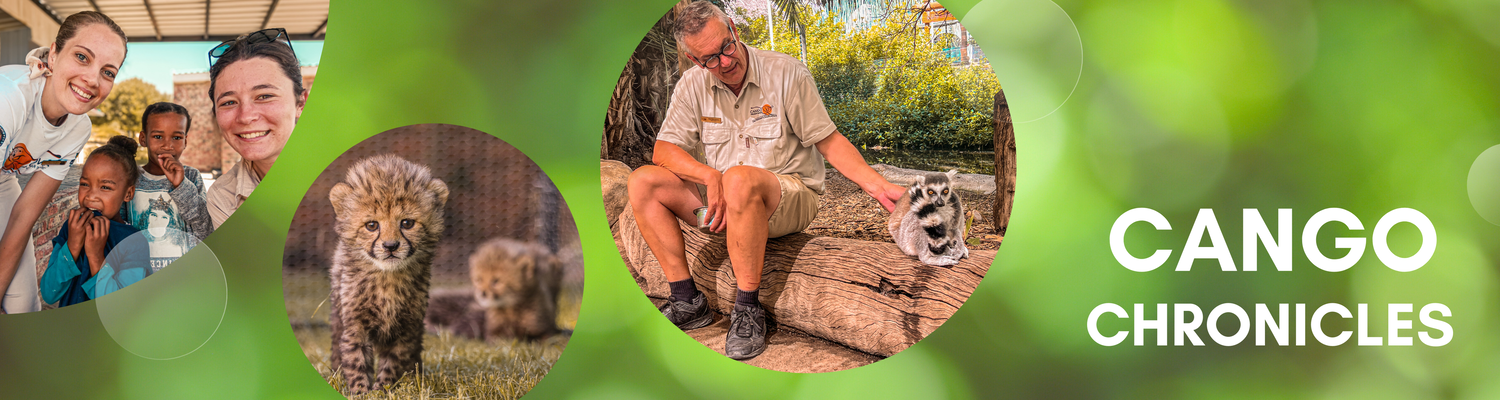
In early December, a male bat weighing just 1 gram arrived at Cango Wildlife after being attacked by a cat and brought in by a concerned member of the public. At that weight, he fit easily into the palm of a hand. Fragile. Silent. Fighting for survival long before he reached our care. Whenever wildlife has contact with a cat, immediate veterinary care is essential. Cat saliva carries bacteria that can be...
Choosing Ethics. Building Bridges. Coming Back.
Posted on Thu January 29, 2026.
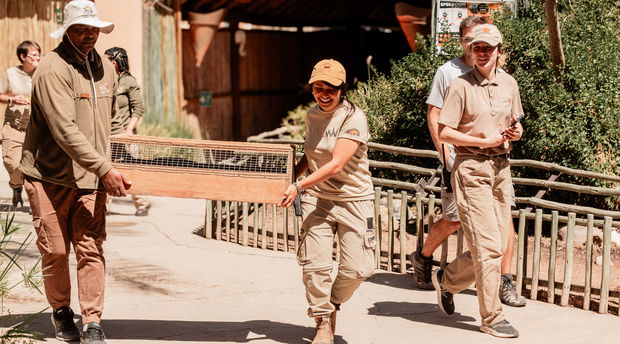
When someone returns to Cango Wildlife, it always means something. When they return with others, it means even more.
Lana first came to Cango Wildlife through her work with an international volunteering platform. Her role is not simply to place people in programmes, but to assess the programmes. To ask the difficult questions. To decide whether a facility is ethical, transparent, and worth trusting with both animals and people.
That was the reason for her first visit...
“I usually visit places to check whether they are ethical,” Lana explains. “If they are, I want to bring my community and my people there.”
After seeing the work being done at Cango Wildlife, she gave that approval. And with it came a commitment to return, and to bring others with her.
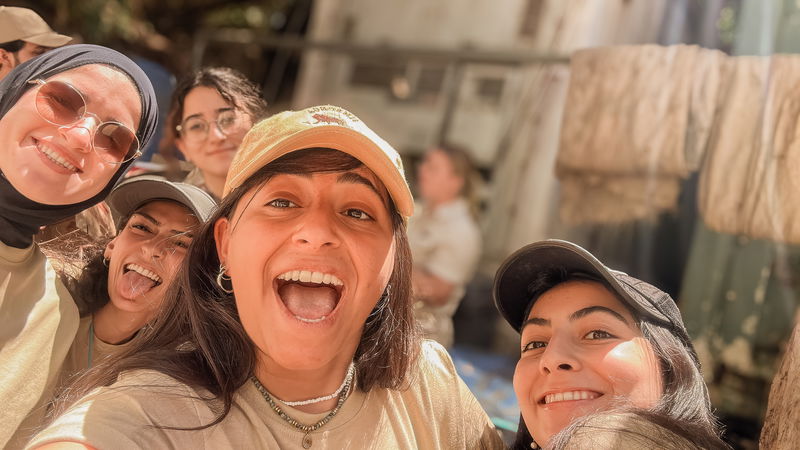
Lana works closely with wildlife volunteering programmes, particularly in South Africa, and this is her third programme in the country. Her platform represents a Palestinian and broader Arab community, with a strong focus on cultural exchange, education, and ethical engagement with wildlife.
For her, volunteering is about more than animals alone.
“We don’t only want to talk about animals,” she says. “We also want to share our traditions and culture, and help the world understand who the Arab community is.”
She also points to a gap that many people do not often consider. There is limited wildlife education content available in Arabic, and even less that comes directly from people actively working in the field. Lana sees herself as a bridge, someone who can translate lived conservation experiences into stories and understanding for a wider audience.
That sense of connection is what drew her, and her volunteers, to Cango Wildlife.
“One of the biggest reasons is actually the people here,” she says. “Even before the animals. It feels like home, because the people make you feel like you belong.”
Like many experienced conservationists, Lana is cautious about hands-on experiences, especially with carnivores such as cheetahs. Ethics and safety are non-negotiable for her. Having worked with carnivores in a zoo environment herself, she understands the responsibility that comes with proximity to wild animals.
“People want to feel close to animals,” she says. “Instead of sending people to places where animals are sedated or exploited, we can bring them to good places where they can have meaningful experiences in an ethical way.”
That message resonates strongly with her community. When Lana shares her experiences at Cango Wildlife on social media, the response is immediate.
“People really want to come,” she says. “No one doubts my choices, because I always speak about ethics.”
Interest has already translated into action, with future groups booked and additional volunteers signing up. Lana anticipates returning to South Africa twice a year, with Cango Wildlife firmly part of those plans.
While the animals leave a lasting impression, the moments that stay with her are deeply personal. Meeting Xena the cheetah on her first visit remains one of her most meaningful memories. And on this return, meeting cheetah cubs for the first time brought an emotional response she did not expect.
“I cried my eyes out,” she says. “I’m constantly making new favourite memories here.”
When asked what she hopes volunteers take away from their time at Cango Wildlife, her answer is immediate.
“I want them to understand what ‘ethical’ really means,” she says. “There are so many places in the world that lie to you. If you don’t know better, you wouldn’t see the difference.”
For Lana, awareness is impact. If someone leaves with even one new understanding about wildlife, ethics, or responsibility, then the experience has mattered.
As Cango Wildlife continues to welcome volunteers from across the world, stories like Lana’s remind us that conservation is also about trust. About shared values. And about people choosing, again and again, to return.
Share This Post
Latest News
-
 From 1 Gram To The Night Sky
Thu February 26, 2026 -
 When Conservation Meets Celebration
Thu February 26, 2026 -
 Rooted In Restoration
Thu February 26, 2026 -
 From 5cm To Freedom
Thu February 26, 2026 -
 A Second Chance For A Porcupette
Thu February 26, 2026 -
 Forty Years - Forty Percent
Thu February 26, 2026 -
 Knysna Dwarf Chameleon In Oudtshoorn
Thu February 26, 2026 -
 Community Clean Up
Thu February 26, 2026 -
 Small Contributions, Lasting Impact
Thu February 26, 2026 -
 Welcoming Our Academy Students Of 2026
Thu February 26, 2026
Further Reading
From 1 Gram To The Night Sky
Thu February 26, 2026
Read This Article
When Conservation Meets Celebration
Thu February 26, 2026
Read This Article
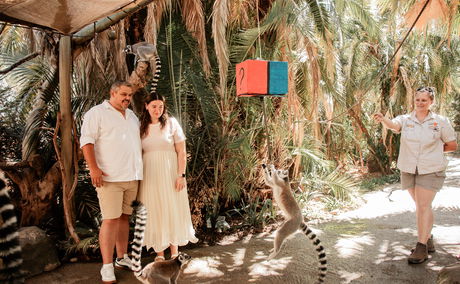
On the first of February, Monique and Rouan Engelbrecht chose to celebrate one of life’s most meaningful milestones in a way that reflected their values. They hosted a conservation conscious gender reveal at Cango Wildlife.
Rooted In Restoration
Thu February 26, 2026
Read This Article
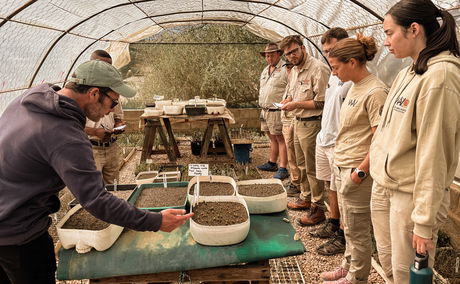
At Cango Wildlife, conservation isn’t something we only talk about; it’s something we’re constantly trying to refine, improve, and live out in practical ways. That includes looking inward: examining how we manage our own environmental footprint, how we treat and restore the land we steward, and how we align our practices with the bigger global sustainability framework - from South Africa’s climate goals to the guiding principles of UN-aligned sustainability and the...
Share This Post