

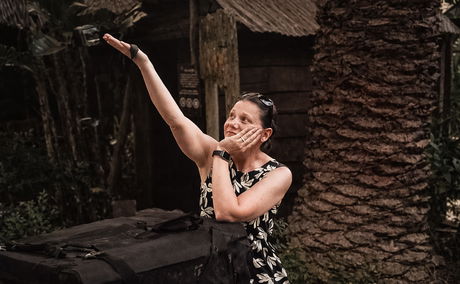
In early December, a male bat weighing just 1 gram arrived at Cango Wildlife after being attacked by a cat and brought in by a concerned member of the public. At that weight, he fit easily into the palm of a hand. Fragile. Silent. Fighting for survival long before he reached our care. Whenever wildlife has contact with a cat, immediate veterinary care is essential. Cat saliva carries bacteria that can be...
Cutie Patootie, baby Agouti!
Posted on Tue March 15, 2022.
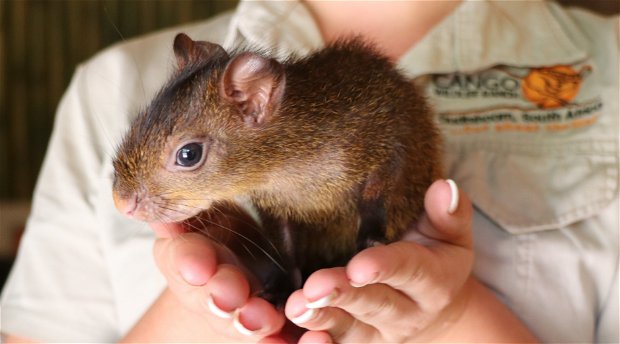
Forming part of our ongoing Amazonia route, our little Agouti family shares a beautiful enclosure adjacent to our Rainforest Bird Aviary. Agoutis are large tropical rodents native to Central and South America, similar to Guinea Pigs but with much longer legs, that can launch them up to 6 feet in the air!
Unlike many small rodents that are born hairless and with closed eyes, Agoutis are born with a beautiful coat and eyes wide open, as we witnessed on 16 February when Mommy Agouti gave birth to two tiny bright-eyed and red-rumped pups. Their enclosure was closed to the public, to give the little family time to nurse and bond, under the supervision of our Zoological Team.
The next morning at sunrise, Craig Gouws (Zoological Manager), headed out early to check on mom and babes, slightly concerned by the unusual drop in temperature that morning. Upon arrival, Craig was met with the sound of a calling baby… and instantly he knew, all was not okay. It is presumed that a much older Agouti sibling separated the mom and new-borns, as it was attempting to latch onto mom upon Craigs arrival. The first 24 hours of any new-born’s life is critical, and sometimes nature can be a little too cruel…
Craig followed the call and found a pup huddled up and alone. He scooped it up and searched for the second, which he quickly found, but sadly it had not survived the night. Craig jumped into action, placed the pup in the incubator, prepared an electrolyte solution and alerted our hand-raising team. The first day was very intense, and the little pup was fed every hour on the hour, both day and night. It then moved to every 2 hours and days later to every 3 hours. This little girl, who first weighed in at 180 grams, has reached 500 grams in just a month!
Our team is working on reintroducing her to the group during supervised day sessions whilst still caring for her at night. Mom has shown little to no interest in her, nor has she shown interest in mom. The other Agoutis seem relaxed around her – all indicators that a full reintroduction will be successful with time.
Her carers say that she is a handful, both literally and figurately, but an absolute delight. The epitome of ‘spunk’, a little live-wire, survivor, self-taught escape artist, and the equivalent of a lightning bolt with fur.
Our social media appeal for assistance in naming her did not disappoint. Dozens of amazing suggestions rolled in and the winning name, Aella, was selected by our staff.
Aella (pronounced A-ye-lla), was an Amazon warrior in Greek Mythology, and the name suitably means whirlwind. Could there be a better description of her? We think not!
Thank you Trudie Bester for the superb suggestion!
Share This Post
Latest News
-
 From 1 Gram To The Night Sky
Thu February 26, 2026 -
 When Conservation Meets Celebration
Thu February 26, 2026 -
 Rooted In Restoration
Thu February 26, 2026 -
 From 5cm To Freedom
Thu February 26, 2026 -
 A Second Chance For A Porcupette
Thu February 26, 2026 -
 Forty Years - Forty Percent
Thu February 26, 2026 -
 Knysna Dwarf Chameleon In Oudtshoorn
Thu February 26, 2026 -
 Community Clean Up
Thu February 26, 2026 -
 Small Contributions, Lasting Impact
Thu February 26, 2026 -
 Welcoming Our Academy Students Of 2026
Thu February 26, 2026
Further Reading
From 1 Gram To The Night Sky
Thu February 26, 2026
Read This Article
When Conservation Meets Celebration
Thu February 26, 2026
Read This Article
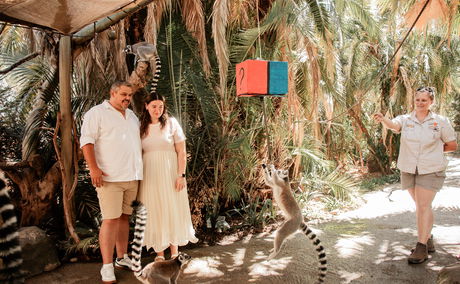
On the first of February, Monique and Rouan Engelbrecht chose to celebrate one of life’s most meaningful milestones in a way that reflected their values. They hosted a conservation conscious gender reveal at Cango Wildlife.
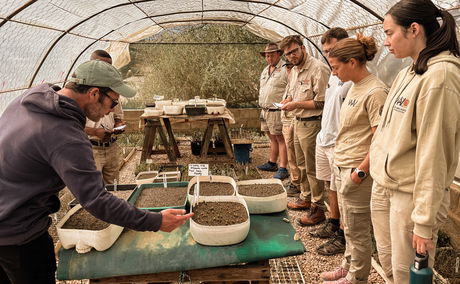
Rooted In Restoration
Thu February 26, 2026
Read This Article
At Cango Wildlife, conservation isn’t something we only talk about; it’s something we’re constantly trying to refine, improve, and live out in practical ways. That includes looking inward: examining how we manage our own environmental footprint, how we treat and restore the land we steward, and how we align our practices with the bigger global sustainability framework - from South Africa’s climate goals to the guiding principles of UN-aligned sustainability and the...
Share This Post